Practical Investigations
The Smart Wireless 30 V, 1 A Voltage and Current Sensor can be used for a wide range of electrical and physics investigations, providing a convenient alternative to conventional voltmeters and ammeters.
Its key advantages include the ability to use multiple sensors simultaneously, record and analyse data using compatible software, and capture rapid changes in voltage and current during transient events, within the sensor’s measurement capabilities.
These features make the sensor particularly useful for practical investigations that develop students’ understanding of electricity, electromagnetism, energy transfer and the behaviour of electrical components.
Examples of investigations that can be enhanced through the use of this sensor include:
- Current in electrical circuits: Investigating the factors that affect current in a circuit.
- Series and parallel circuits: Measuring how voltage and current are distributed in different circuit configurations.
- Ohm’s law: Exploring the relationship between voltage, current and resistance.
- Conductors and insulators: Comparing the electrical properties of good and poor conductors.
- Alternative energy sources: Investigating the electrical output of solar cells, wind turbines and water-powered generators.
- Fuses and circuit protection: Examining the relationship between current and the operation of protective devices.
- Laws of resistance: Investigating how resistance depends on the length, cross-sectional area and material of a conductor.
- Resistance of long wires: Exploring the effects of wire length on resistance, current and power transfer.
- Electrical component characteristics: Recording voltage–current characteristics for components such as resistors, lamps and diodes.
- The dynamo effect: Investigating the generation of electrical voltage and current using a moving magnet or rotating coil.
- Lamp start-up current: Measuring changes in current when a lamp is switched on.
- Faraday’s law of electromagnetic induction: Investigating induced voltage and current in a coil as the magnetic field changes.
- Capacitors: Studying charging and discharging behaviour, time constants and stored energy.
- Diodes and rectification: Investigating diode characteristics and the conversion of alternating current to direct current.
- Specific heat capacity: Monitoring electrical power supplied to a heater during experiments to determine the specific heat capacity of a liquid or solid, when used alongside suitable temperature and mass measurements.
- Thermometer calibration: Comparing temperature measurements with a reference thermometer during controlled heating and cooling experiments.
- Impedance and frequency: Investigating how the impedance of an electrical circuit changes with frequency.
- Electric motors and generators: Measuring electrical input and output to investigate energy conversion and efficiency.
- Resonance in a series LCR circuit: Exploring the relationship between frequency, current and circuit impedance.
- Capacitive reactance and phase: Investigating how current and voltage vary with frequency and their phase relationship in a capacitive circuit.
Online Videos
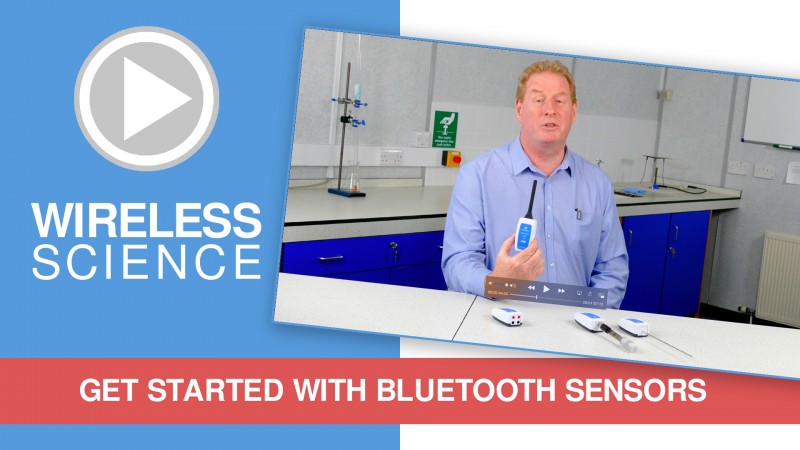
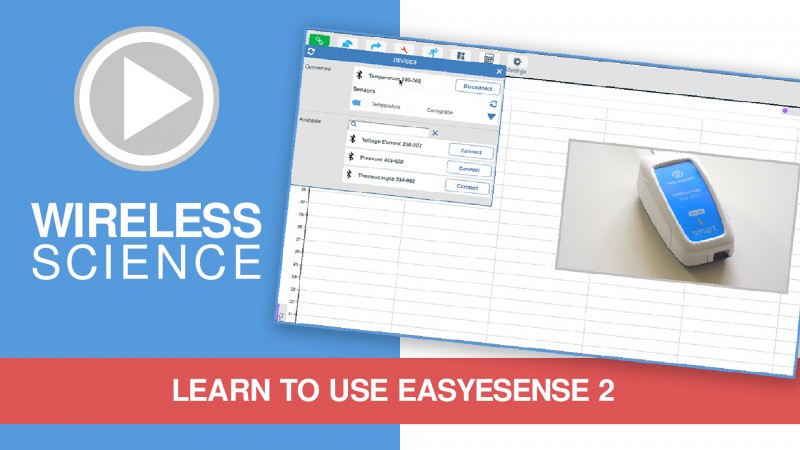
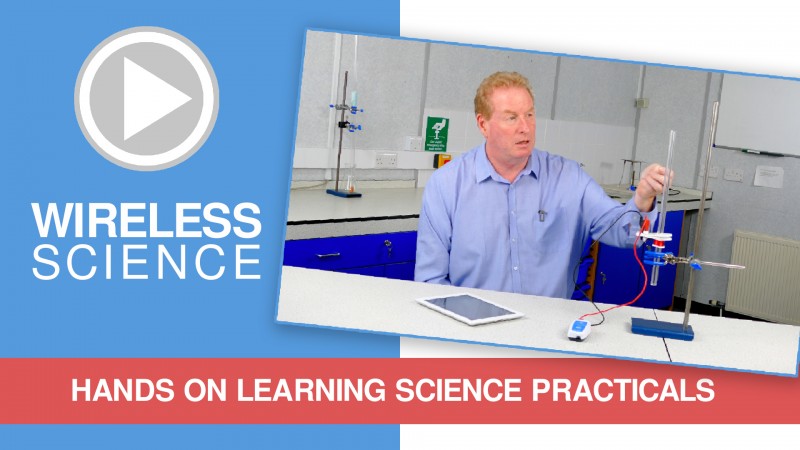
Learn how to use data logging in the classroom with our Secondary Science Academy demonstration videos, which will walk you through using the new EasySense app and show you how to get hands-on with the latest Bluetooth wireless sensors. The video experiments will show you how to get the best out of your science lessons.
New online content is being continuously uploaded onto our YouTube channel, including practical worksheets as well as videos.
See our website for further information and links.
|
|
Explore Bluetooth SensorsAre you looking to make the jump to our smart wireless sensors? Or have you recently purchased them and want to know more about how they work? |
|
|
Explore EasySenseThe core of our science platform is our EasySense app. In these videos you will learn everything from the basics of our software to the most in-depth features. |
|
|
Explore Science PracticalsSee our Smart Wireless Sensors in action with a range of practical experiments. This is the best way to get started with the new Bluetooth sensors! |